


お役立ちコラム
複数言語下で育つ子どものことばの発達について Language Development in Multilingual Environment
2026.08.19公開 / 2026.08.20更新
複数言語下で育つ子どものことばの発達について、保護者のみなさまから寄せられる疑問や心配にお答えします。
Evidence-based answers to common questions and concerns about language development in bilingual and multilingual children.
複数言語下で育児をしていると、ご家族や、園・学校の先生方、お医者さま、インターネットやSNSなど、様々なアドバイスを受けて戸惑うことがあるかもしれません。このリーフレットでは、ことばの発達に関する研究結果に基づいて情報をまとめています。複数言語での育児に関する研究には、ご家族にとって心強い結果がたくさんあります。ぜひ参考にしてください。
Many families raising children with two or more languages receive conflicting advice from family members, teachers, doctors, and the internet. This brochure offers answers based on current research in speech-language pathology and child language development.
We hope it brings some reassurance, because the research has a lot of good news for multilingual families.
この記事を書いている会社:
株式会社LITALICO
LITALICOジュニアは、発達が気になるお子さま向けソーシャルスキル&学習教室です。
指導実績45,000人以上※1、 全国190教室以上※2、多くの指導実績を通して培ったノウハウに基づき、満足度の高いサービスを提供しています。
2024年8月時点(児童発達支援・放課後等デイサービス・パーソナル総数)
2024年9月時点(児童発達支援・放課後等デイサービス・パーソナル総数)
幅広いニーズと困りごとへの指導実績!
ADHD/自閉スペクトラム症/学習障害/グレーゾーン/言葉の遅れ/感情コントロールが苦手/コミュニケーションが苦手/学習の遅れ
バイリンガルだと、ことばの発達が遅れるのでしょうか?
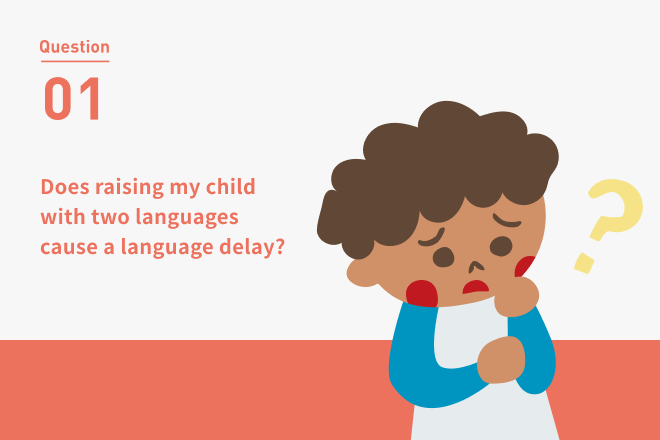
いいえ。バイリンガルであること自体が、ことばの遅れの原因にはなりません。喃語(なんご)や初めて言葉が出る時期などは、複数言語下で育つ子どもも、そうでない子どもも、ほぼ同じと言われています。片方の言語だけを見ると遅れているように見えることがありますが、それはバイリンガルの子どもがもつ言語知識が2つの言語に分かれているからです。両方の言語を合わせて考えると、バイリンガルでない子どもと同じかそれ以上であることが多いと言われています。
No. Bilingualism does not cause language delay.
Bilingual children reach early language milestones, like babbling and saying their first words, at roughly the same time as children growing up with one language. It may look like a delay when you compare a bilingual child’s skills in one language to those of a child who only speaks that language.
This is because a bilingual child’s language knowledge is spread across two languages. But when both languages are considered together, their overall vocabulary and language ability is on par with, and sometimes greater than, that of monolingual children.
子どもが2つの言語を混ぜて話すことがあるのですが、 言い直させた方がいいのでしょうか?
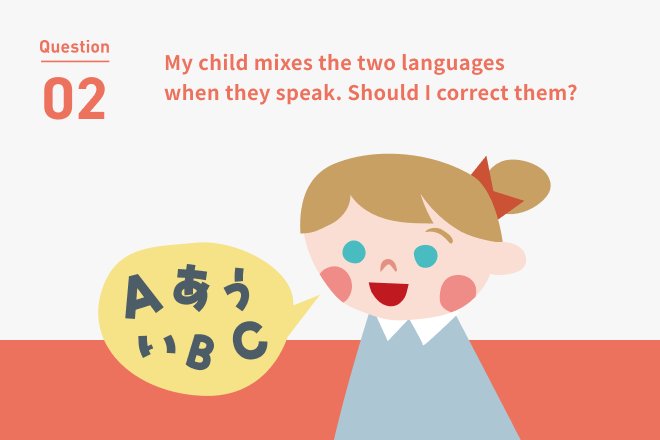
2つの言語を混ぜて使うことはコード・スイッチングと呼ばれます。これはバイリンガルの話者にとってごく自然なことです。混乱しているわけでも、ことばの障害があるわけでもなく、片方の言語の方が言葉が出やすかったり、表現しやすかったりと、理由はさまざまです。お子さまが言語を混ぜているとしたら、それは2つの言語をうまく使いこなしている証拠でもあります。バイリンガルとして自然にしていることですので、無理に直す必要はありません。
Mixing languages, known as code-switching, is a natural feature of bilingual communication in children and adults alike. It is not a sign of confusion or a language disorder.
Children mix languages for many practical reasons: a word may come to mind more easily in one language, or they may just find it easier to express something a certain way. This flexibility is a sign that they are drawing on both their languages.
If your child is mixing languages, they are simply doing what bilingual speakers naturally do, and forcing them to correct it is not necessary.
家庭で2つの言語を混ぜて使っても大丈夫ですか?
まったく問題ありません。バイリンガルの大人が2つの言語を行き来することは珍しくなく、それが子どもの言語発達に悪影響を与えるという研究結果もありません。2つの言語をきっちり分けるかどうかに関わらず、豊かで自然な会話をたくさん聞かせてあげることが大切です。
「一親一言語」という考え方を聞いたことがある方もいるかもしれません。これは家庭の中で、たとえば、母親は日本語を、父親は英語を、一貫して使うという方法です。この方法がうまくいくご家族もいますが、必須ではありません。保護者さまが自信を持って使える言語でたくさん話しかけ、ご家族にとって自然で無理なく続けられる方法を選んでください。
Not at all. Many bilingual adults move naturally between their two languages, and research does not show this to be harmful to children’s language development. Children benefit from hearing plenty of rich, natural conversation in both languages, regardless of whether those languages are kept neatly separate.
You may have heard of the “one parent, one language” approach, where each parent consistently speaks a different language to the child, for example, mother speaking Japanese and father speaking English. This works well for some families, but it is not a requirement, and other approaches work just as well. Do what feels natural and sustainable for your family.
- 祖父母や親戚の方にも、その方が自信をもって使える言語で、お子さまと積極的に話してもらいましょう。お子さまが接する話者が多いほど、ことばの学びは豊かになります。
- Encourage grandparents to keep using the language they feel comfortable speaking to your child. Every speaker your child hears is a valuable source of input, helping build a strong language base.
日本で育ち、日本の学校に通う場合、 家庭でも日本語の習得を優先した方がいいのでしょうか?
お子さまに、これから暮らす土地でのびのび育ってほしいという気持ち、よくわかります。ただ、ご家庭で保護者さま自身の第一言語をしっかり使うことは、実はお子さまの日本語力を伸ばすことにもつながります。
子どもの言語は、豊かな会話の中で育ちます。保護者さま自身が得意な第一言語で話すと、自然と多彩な表現や温かい伝え方を使えますが、慣れない言語だとどうしても会話の中身が単調になりがちです。豊かなことばをたくさん聞いて育った子どもの力は、日本語を含む他の言語にも応用されます。
日本語は、学校や友達、日常生活の中で自然と身についていきます。ご家庭だからこそできることは、保護者さまが自信を持って使える言語で、自然に話しかけてあげることです。それはほかの誰にも、どんな環境にも代えがたい貴重な経験です。
It’s natural to want your child to thrive in the community they’re growing up in. Supporting the parent’s first language, though, is actually one of the best things you can do for your child’sJapanese too.
Children learn language best through rich, natural conversation — the kind filled with varied vocabulary and warmth. This richness comes most easily in the language a parent knows best. When parents speak a language they’re less comfortable in, the conversation naturally becomes simpler and less varied.
A strong foundation built from rich input carries over to other languages, including Japanese.
Your child will gain Japanese through school, friends, and daily life in Japan. What you can offer at home is something those environments can’t provide: your language, spoken with fluency and ease.
子どもに発達障害の診断がある場合、家庭内で使う言語を 1つに絞った方がいいのでしょうか?
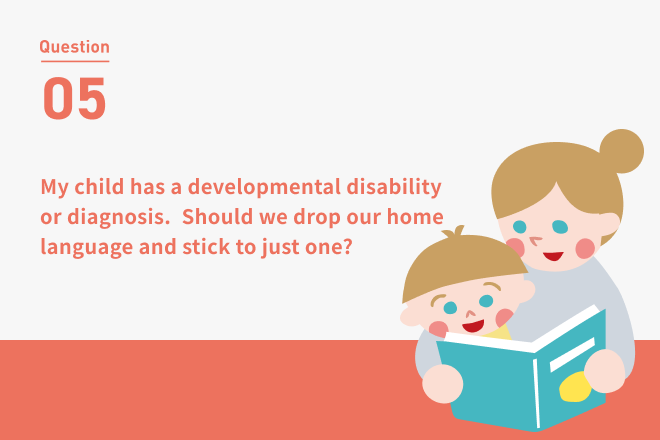
診断を受けたお子さまを持つご家族が「家庭内の言語を1つに絞った方がいい」と言われることは、今でもよくあります。お子さまのことを心配してのアドバイスだとわかっていても、迷ってしまうことがありますよね。
ただ、現在の研究では、そのような必要はないことがわかっています。
発達障害のある子どもも、複数の言語を習得できます。
発達性言語障害(DLD)、自閉スペクトラム症(ASD)、ダウン症候群、ディスレクシアなど、さまざまな診断を持つお子さまたちがバイリンガルとして育っています。複数の言語に触れることが発達障害のある子どもに過度な負担をかけるという根拠は、現時点では見つかっていません。
保護者さまが自信をもって使える言語を手放すことには、見えにくいけれど大切なものを失うリスクがあります。家族との距離が広がったり、文化的なつながりが薄れたり、豊かな会話の機会が減ったりします。保護者さまが自信を持って使える言語で話すことが、親子の会話をもっとも豊かにするでしょう。
The advice to drop your home language when a child has a diagnosis is one of the most common pieces of advice given to families in your situation, and one of the most well-intentioned. But research does not support it, and following it may mean giving something up for no real benefit.
Children with developmental disabilities are able to acquire multiple languages. This includes children with Developmental Language Disorder (DLD), Autism Spectrum Disorder (ASD), Down syndrome, dyslexia, and other diagnoses. There is no scientific basis for the idea that two languages are too much for a child with a developmental disability.
Dropping the home language has real consequences: a child may lose access to family members who only speak that language, connections to cultural identity can weaken, and parents lose the ability to communicate with their child in the language they know best — often the richest and most natural form of interaction they can offer.
- 保護者さまの第一言語は、ぜひ使い続けてください。診断のあるお子さまに追加のサポートが必要になることはありますが、それはバイリンガル育児と一緒に進めていくことができます。言語を1つに絞ることが、唯一の対策ではありません。
- Continue using your home language.
Children with diagnoses may need extra support,but that support should come alongside bilingualism, not at the cost of it.
子どもが学校で日本語に苦労しているようです。これは言語障害 なのでしょうか?どんな場合に専門家に相談すべきですか?
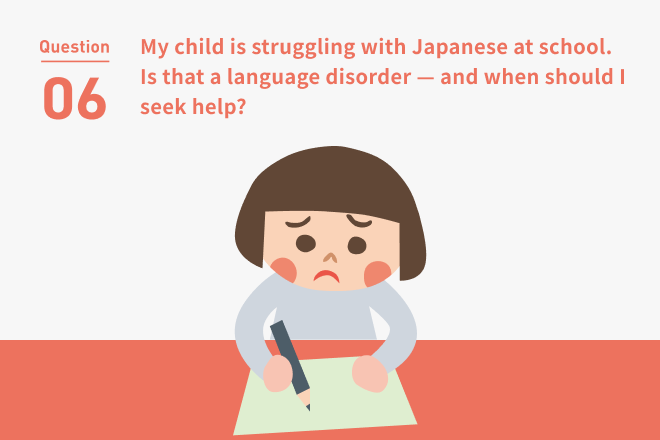
第二言語の習得、特に学校の授業に苦労することは珍しくなく、多くの場合は自然な発達の過程で起こることです。新しい言語を習得するには時間がかかります。研究によると、第二言語での日常会話は1〜2年ほどで身につくことが多いですが、授業の理解に必要な力は5〜7年、あるいはそれ以上かかることもあると言われています。
言語障害がある場合は、日本語だけではなく、両方の言語に影響が出ます。お子さまが得意な言語でしっかりコミュニケーションが取れているなら、まず大きな心配はいらないでしょう。
ただ、保護者さまの持つ直感も大切にしてください。両方の言語で苦労している様子がある、よく知っている人にもなかなか伝わらない、時間が経ってもことばの成長があまり見られない、といった場合は、専門家に相談することをおすすめします。
Struggling in a second language, especially at school, is very common and often part of normal development.
Learning a new language takes time. Research shows that basic conversational skills in a second language typically take around 1–2 years to develop, and the language needed for academic success — reading, writing, following lessons — can take 5 to 7 years or longer.
A language disorder would show up in both languages, not just the school language. If your child communicates well in your home language, that is a reassuring sign.
That said, trust your instincts. If your child seems to be struggling in both languages, has difficulty being understood by people who know them well, or is making little progress over time, it is worth talking to a specialist.
- お子さまの発達について気になることがあれば、LITALICOジュニアへどうぞお気軽にご相談ください。一人ひとりの成長のペースや個性を大切にしながら、ご家族と一緒にお子さまを支えます。
- If you have concerns about your child’s development, don’t hesitate to reach out to LITALICO Junior. Every child is different, and we are here to support each child, working together with the family to nurture everything that makes them who they are.

参考文献 References
Byers-Heinlein, K., Morin-Lessard, E., & Lew-Williams, C. (2017). Bilingual infants control their languages as they listen.
Proceedings of the National Academy of Sciences, 114(34), 9032–9037. Hoff, E., & Core, C. (2015). What clinicians need to know about bilingual development. Seminars in Speech and Language, 36(2), 89–99.
Hoff, E., Core, C., Place, S., Rumiche, R., Señor, M., & Parra, M. (2012). Dual language exposure and early bilingual development. Journal of Child Language, 39(1), 1–27.
Kay-Raining Bird, E., Genesee, F., & Verhoeven, L. (2016). Bilingualism in children with developmental disorders: A narrative review. Journal of Communication Disorders, 63, 1–14.
Paradis, J. (2017). Bilingual children’s long-term outcomes in English as a second language: Language environment factors shape individual differences in catching up with monolinguals. Developmental Science, 20(1).
Paradis, J., Genesee, F., & Crago, M. B. (2021). Dual language development and disorders: A handbook on bilingualism and second language learning (3rd ed.). Brookes Publishing.
Place, S., & Hoff, E. (2011). Properties of dual language exposure that influence 2-year-olds’ bilingual proficiency. Child Development, 82(6), 1834–1849.
Thordardottir, E. (2019). Amount trumps timing in bilingual vocabulary acquisition: Effect of input in simultaneous and sequential school-age bilinguals. International Journal of Bilingualism, 23(1), 236–255.
文章:ますもとあやか Speech-Language Pathologist (CCC-SLP)
このページに関連する
おすすめコンテンツ
-

Q&A
LITALICOジュニアに寄せられるよくある質問をご紹介します。
-
LITALICOジュニアとは
LITALICOジュニアはお子さま一人ひとりの得意や苦手を見つけ、それぞれの特性に応じた指導をおこなう教室です。
-
秋の特別コース
夏休みが終わり、新学期がはじまったころ。今、気になるつまずきや心配に対して、お子さまに合わせたサポートを一緒に考えませんか?
当サイトに示された教育によるお子さまの成長やスキルの習得等には個人差があります。結果を保証するものではありません。
掲載されている感想やご意見等に関しましても個々人のものとなり、すべての方にあてはまるものではありません。
当サイトに掲載している文章、画像等の無断転載、無断引用を禁じています。